How Modern Schools Are Shaping Student Success
Jun 22, 2026
Every school website in Gurgaon uses the word ‘modern.’ Smart boards. Air-conditioned corridors. A robotics lab photographed from three angles. The word became wallpaper. Modern schools that produce different outcomes look modern in places the brochure skips: how they assess, how they train teachers, how they handle the student who does not fit the mold.
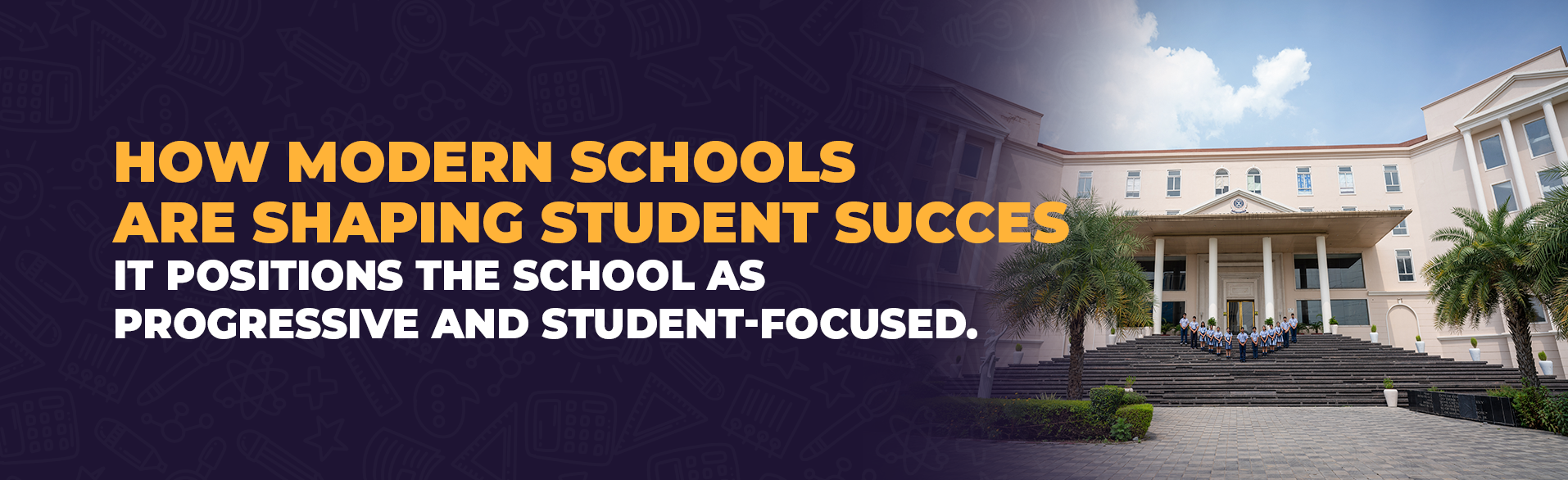
A school built in 2024 running the same methods from 2004 is a new building with an old engine. When the campus was constructed tells you nothing about whether the classroom asks a student to think or to remember. The conversation about modern education starts at the lesson plan, not the entrance gate.
What Actually Changed Inside the Schools That Produce Different Results
The visible changes are easy to notice. Projectors replaced chalkboards. Tablets entered classrooms. Online portals replaced paper report cards. These are improvements in how education is delivered. The schools producing stronger outcomes changed something much deeper. They changed what students are expected to do with knowledge rather than simply changing how it is presented.
A traditional classroom asks students to listen, memorise, and reproduce information. A modern classroom encourages students to question, apply, analyse, and demonstrate understanding through meaningful tasks that often have more than one possible solution.
How Student Success in Education Stopped Being Just a Number on a Report Card
For many years, student success was measured almost entirely through examination marks. Today, schools increasingly recognise that academic scores alone cannot capture the full range of skills students need for higher education and future careers.
Successful schools now observe broader indicators of growth, including:
- Communicating confidently under pressure.
- Collaborating effectively with different classmates.
- Managing long-term projects with increasing independence.
- Applying knowledge to unfamiliar situations instead of simply recalling facts.
These abilities often provide a stronger indication of future success than examination scores alone.
Innovative School Education That Outlasted the Trend Cycle
Educational innovation is often associated with the latest technology, whether coding classes, artificial intelligence workshops, or virtual reality. However, genuine innovation lasts only when it solves a meaningful educational challenge rather than simply introducing something new.
The approaches that have delivered lasting value include project-based learning and formative assessments, both of which help students apply concepts while identifying learning gaps before final examinations.
- Technology without integration: A 3D printer or advanced laboratory becomes little more than equipment if teachers are not trained to incorporate it into everyday lessons.
- Occasional demonstrations: Virtual reality headsets or similar tools create excitement during school events but provide limited educational value if rarely used in regular teaching.
The schools achieving lasting success share one important characteristic. They support teachers through the adjustment period required to adopt new teaching methods instead of expecting immediate results from new technology.
The clearest sign of successful innovation is that technology gradually fades into the background. Students stop noticing the projector or software because learning—not the technology itself—becomes the focus.
What Parents Should Look for That the Prospectus Will Not Show
School tours showcase classrooms, laboratories, sports facilities, and libraries. While these resources matter, they reveal very little about how a school supports individual learners.
Parents should instead ask practical questions such as:
- How does the school support students who struggle in one subject while excelling in others?
- Are remedial programmes, differentiated instruction, or personalised learning plans available during regular school hours?
- How are disagreements between teachers and parents resolved when discussing a student's learning needs?
The answers reveal whether the school adapts to individual students or expects every learner to fit the same system.
The School That Prepares the Student Versus the One That Prepares the Result
Some schools focus primarily on examination preparation through repetition, structured practice, and intensive revision. This approach can produce excellent board examination results.
Other schools invest equally in developing critical thinking, independence, communication, creativity, and self-management alongside academic achievement. These skills often require more time to develop but prepare students for challenges extending well beyond examinations.
High academic scores and well-rounded capability do not always develop together automatically. The schools that successfully combine strong academic performance with meaningful personal development remain uncommon, but they represent the most balanced model of modern education.